
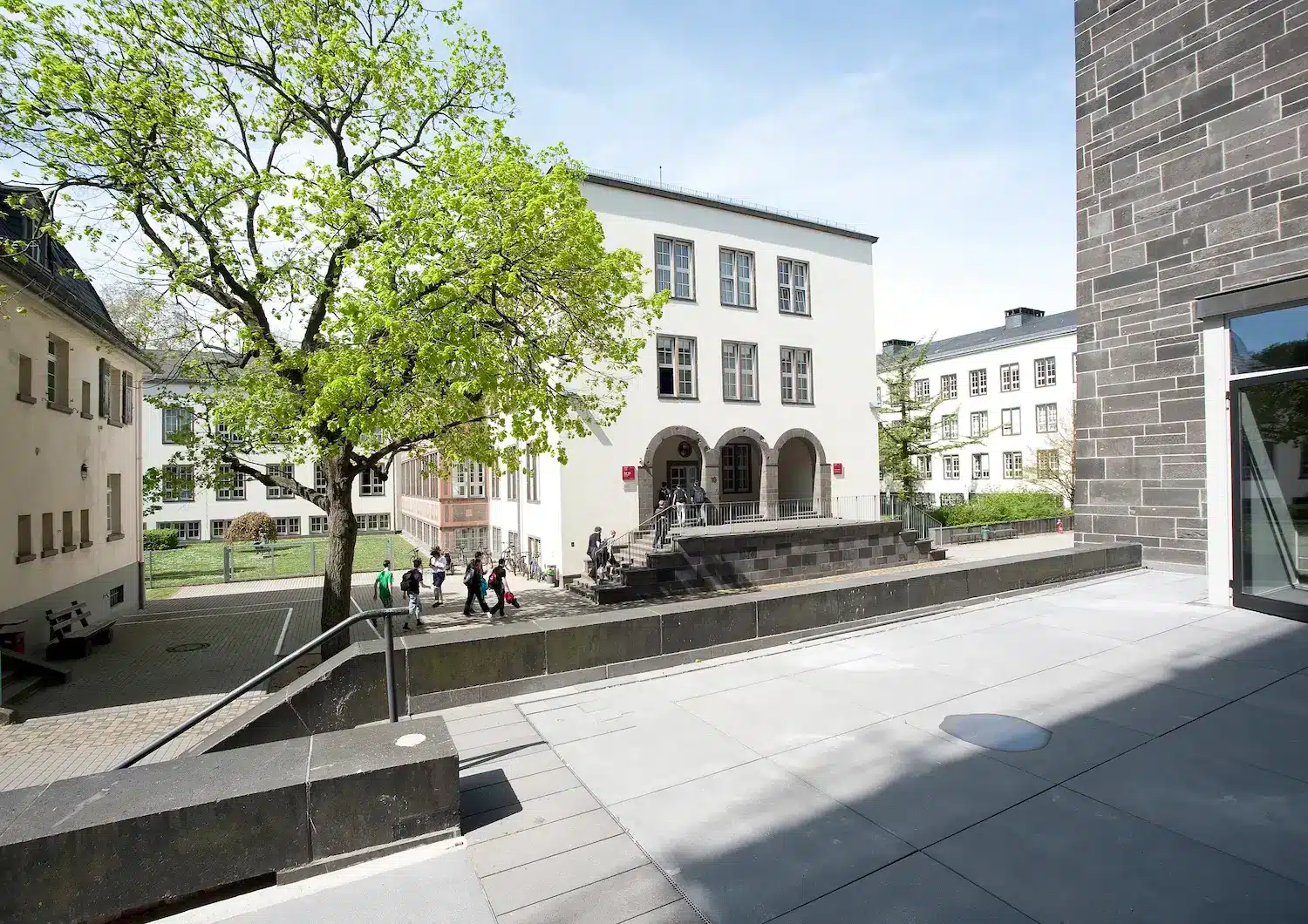
Even Einstein recommended the Technische Universität Darmstadt, founded in 1877, as a “good polytechnic”. Today, the university offers 114 courses of study in four fields of study and 13 departments and is one of the leading technical universities in Germany, especially in the field of engineering.
Strong networks form an important basis for this lasting success: on the one hand, between the engineering and natural sciences and the humanities and social sciences. But also with external partners such as the Darmstadt Fraunhofer Institutes for Security in Information Technology (SIT) and for Graphic Data Processing (IGD). Through the strategic alliance of the Rhine-Main Universities, scientists and students benefit from joint courses of study and strong research alliances.
TU Darmstadt is also opening up new avenues internationally: in 2019, it was awarded the title of “European University” together with six other European technical universities. The alliance called “UNITE!” will receive five million euros in funding over the next three years. The goal is a trans-European campus.
The TU Darmstadt is a family-friendly university and has been certified and awarded several times for this. The Family Service Center supports students and employees in organizing family responsibilities in their studies and professional career.
© TU Darmstadt
Department of Computer Science – solid foundations and diverse specialization
With about 30 fields of study, the professors and research assistants of the department provide both comprehensive basic training and specialization in socially relevant topics such as IT security, artificial intelligence, robotics, visual computing and massively parallel software systems. By combining complex, practice-oriented tasks and interdisciplinary research, the over 3,700 students are prepared at an early stage for the demands and challenges of the working world.
Measured by publications in respected scientific media, the TU Darmstadt is one of the leading German universities in Europe in the field of computer science.
So far, the following projects have been realised in cooperation with TU Darmstadt
DeeBOP: Deep Batch Bayesian Optimization for the design of sequences in biology

OptikAR: Simulation of visual impairments and the resulting side effects using augmented reality

MoMiKoSy: Development of a Molecular, Microfluidic Communication System

AC3Net: Autonomous Communication in Cooperative Computer Networks

IBER-Struct: Memory and Runtime Efficient Data Structures for Image-Based Scene Editing and Rendering

Textbook-AQG: Automatic question generation to improve the understanding of science books
DiSPErse – Learning, Distributed Algorithms for Service Placement in Edge Computing Infrastructures
DA-VBB – Digital assistant for understanding official notices
Cloud-ATLAS – Automated analysis of the scalability, performance and efficiency of cloud services
3D CSR – 3D Clear Structure Reconstruction
INTEXPLORE – Interactive Structured Text Exploration

ChameleonAI: Performance Portable and AI-driven Perception for Edge Devices
SPNC: Sum-Product Network Compiler for accelerated inference on heterogeneous architectures
5G-PCI – Hardware accelerated virtualization of network functions using PCIe in 5G access networks
Sci-Arg – Identification and Aggregation of Arguments in Scientific Literature on Basis of Natural Language Processing
LoT: Ledger of Things – A Lightweight Blockchain for IoT Applications
ITMAR – Interaction Techniques for Mobile Augmented Reality
TGTOVE – Text Generation for Tone of Voice and eCommerce

TriCS – Recommendation systems for corporate crowdsourcing platforms
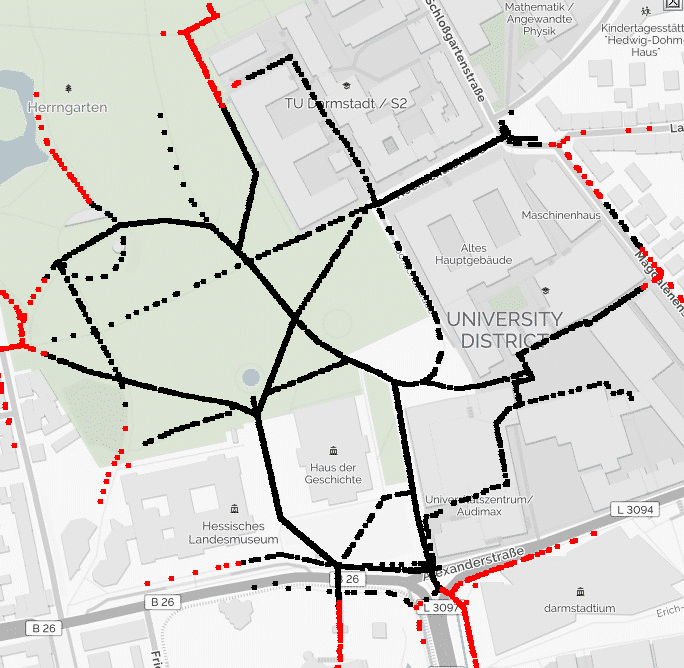
DisasterSense – Decentralized collection and distribution of environmental information for situation assessment in disaster scenarios
PersoProfi – Automatische Vorhersage von Persönlichkeitsmerkmalen fiktiver Charaktere

Eko – Intelligente Entwicklungswerkzeuge zur korrekten Wiederverwendung bestehender Softwarekomponenten
MSENS – Ereignis-basierte Middleware für körpernahe Sensornetze sowie die Einbindung in ihre Umgebung

IWI3D – Interactive web-based inspection of heterogeneous 3D data sets
Printeract – Entwicklung von Konzepten zur Interaktion mit 3D-gedruckten Objekten

AWS – Intelligente Unterstützung für argumentatives Schreiben
LICORES – Linking unstructured content to domain? specific knowledge repositories using contextualized distributional semantics
dataVIAS – Visuell-Interaktive Suche und Analyse von funktionalen Zusammenhängen in großen und komplexen Daten

WEFITM – Weiterentwicklung der FIT-Metrik für Ereignis-basierte Softwaresysteme

KaVE – Verfeinerte Extraktion von Best-Practices aus Software Repositories durch Kombination von automatisierten Verfahren mit Expertenwissen

IT-GiKo – Gitterbasierte Kryptographie für die Zukunft
Poker – Policy-getriebene Konextualisierung in ereignisbasierter Middleware
INEBKO – Integration ereignisbasierter Komponenten in Geschäftsprozesse
KoBeDie – Kosteneffiziente Bereitstellung Cloud-basierter Unternehmensanwendungen unter Berücksichtigung von Dienstgüteanforderungen
EnerFlow – Verfahren für ein intelligentes Energiemanagement zur Optimierung des Energieverbrauchs in intelligenten Umgebungen unter Einbezug von Kontextinformationen
DynamicGraphs – Inkrementelle Graphentheoretische Analyse Dynamischer Systeme
CloudAR – Cloud-basierte Augmented Reality
MoVe4Dynamic – Modulares Vertrauensmanagement für dynamische Dienste
ViAZ – Visuell-interaktive Analyse von Ausfalleffekten in Zulieferungsnetzwerken
CoSecure – Enhancing Surveillance Systems through Mobile Live User Generated Video Sharing
OpenWindow – Verlinkung von Bildungstexten mittels Sprachtechnologie

PEAKS – Plattform zur effizienten Analyse und sicheren Komposition von Softwarekomponenten
BoRoVo – Sichere, robuste, effiziente und flexible, dezentrale Wahlsysteme für spontane Wahlen in Managements
CME – Concurrent Manufacturing Engineering
Dekomposed – Reputationsdekomposition in Dienstkompositen
SADoku – Methoden zur domänenabhängigen Strukturierung und Analyse unstrukturierter Textdokumente


