Anyone setting up a research team will, sooner or later, have to select new staff – often for the first time. The seminar “Successful Recruiting for Research Teams” provides Software Campus participants with practical guidance on how to approach the entire process: from needs analysis to onboarding.
An introductory training on recruitment
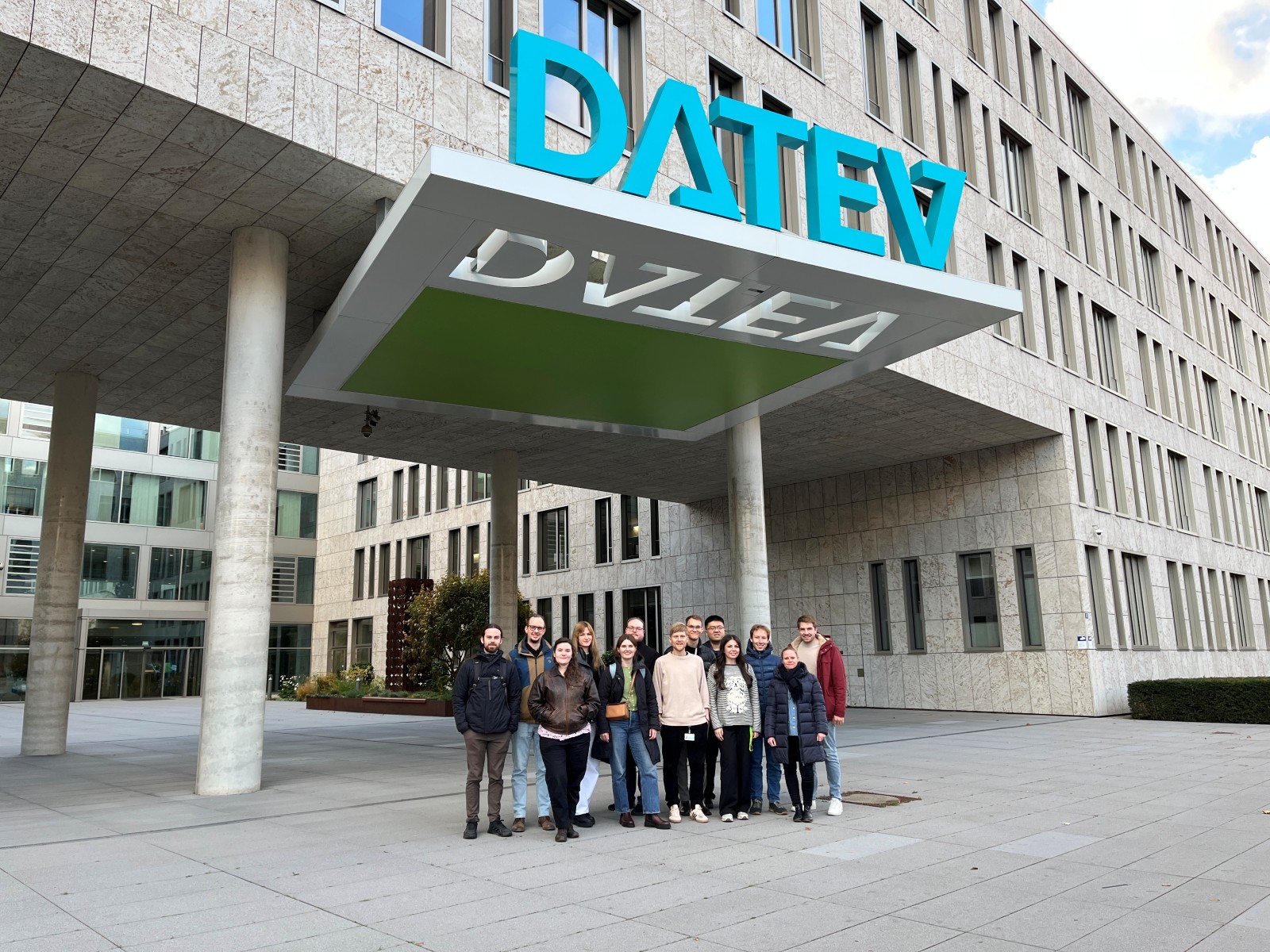
Participants in the Software Campus lead their own teams at their respective research partners and select their own staff. For many, this is uncharted territory. This is precisely where the seminar, titled "Successful Recruitment for Research Teams" at our Industry Partner DATEV, came in. The focus was on specific approaches, practical guidance and exercises. In addition, examples and experiences from DATEV provided insights into how recruitment works in a corporate setting.
It starts with the question: Who are we actually looking for?
Before a position is advertised, it should be clear which skills the team is lacking, both in terms of professional expertise and personal qualities. To carry out this assessment, the participants learnt about methods such as the skills matrix, the team radar and self-reflection.
Building on this, the hard skills requirements are analysed using various approaches, amongst other things. Based on the project and role requirements, it is determined, which qualifications, certificates or training courses are essential for the role but are not yet available within the team. The skill gap analysis examines what expertise the team currently lacks and will need in the future, for example in relation to AI skills or the tech stack. The target group assessment, meanwhile, examines how realistic it is to find these skills on the job market. These steps result in a profile of the ideal candidate. Clarification of the budget rounded off this part of the process.
Job adverts that reach the right target audience
The second session focused entirely on job advertisements. How should a job advertisement be structured? What content and tone are appropriate? What should be avoided? And what role does pay transparency play? Positive and negative examples brought these points to life. The participants then worked in groups to draft a job advertisement themselves.
Equally important is the question of where a vacancy is advertised. Whether it’s internal networks, job portals, events or social media: an overview showed which target groups can be reached through which channels. In a LinkedIn crash course, Social Media & Community Manager Sarah Tausche explained how to use one’s own LinkedIn profile strategically for recruitment.
Reviewing applications and conducting targeted interviews
The most extensive part of the training focused on the recruitment process. The first part dealt with handling applications: data protection, communication with applicants and retention periods. Key performance indicators in the recruitment process help organisations to act swiftly and in line with market standards. These include deadlines and response times, transparency, equal treatment and data protection.
How can resumes, cover letters, academic transcripts and certificates be read correctly, and what are the warning signs? Participants were given guidance on how to interpret these documents and practised deciphering the language used in job references using examples.
For job interviews, the focus was on the process and structure: how many interviews does a good recruitment process require, and what is discussed at each stage? Sample questions were presented for first and second interviews, along with guidance on hard-skill tests and various questioning techniques. One technique that was particularly recommended was the Critical Incident Technique. In this technique, candidates describe a situation that was critical to their success, which they have experienced, and how they dealt with it. This allows several soft and hard skills to be assessed with just a few questions and directly compared with the job requirements. In a practical exercise, the participants tried out the technique for themselves.
The trainers, Raphael Hirschmann and Betül Yamurluk, are recruiters at DATEV themselves and used their own experiences to bring the theory to life. Team Lead Walter Leonhardt also spoke about his day-to-day work recruiting software developers, as well as the current challenges in HR development arising from the changes to the job market brought about by AI.
Other aspects of the selection process were also discussed, including the legal framework – which questions are permitted and which are not? – strategies for recognising embellished self-presentations, as well as common assessment errors and how to avoid them.
The process isn’t over once a candidate has accepted the offer. The final section of the training focused on how to ensure new staff settle in well with the team. Anyone who neglects the onboarding process risks new team members leaving again soon after joining.
Insights into innovation management at DATEV
As well as exchanging practical experiences with DATEV staff from the HR department, the training participants were also able to discuss matters with Alexander Wild, Team Lead for Research and Innovation Network, and Wolfgang Wagner, New Technologies and Trends. They spoke about innovation management at DATEV, which is institutionalised through the Trend Radar. This process involves all DATEV staff in identifying technology trends. The micro-projects implemented at the Software Campus are also part of the Trend Radar and help to bring new technologies to a wide range of departments. The two also discussed DATEV’s ‘AI First’ approach with the participants, as well as how AI is influencing software engineering within the company.
In the evening, the participants took a guided tour to explore Nuremberg’s medieval dungeons, before rounding off the day with some Franconian cuisine at a local pub.